
Japan has become one of the most attractive destinations for international students, graduates, and skilled professionals seeking career growth abroad. With its advanced technology sector, strong economy, excellent infrastructure, and high quality of life, Japan offers numerous opportunities for internships and long-term employment.
Whether you are a student looking for practical work experience or a professional planning to build a career in Japan, understanding the country’s internship programs and work visa requirements is essential. This comprehensive guide explains everything you need to know about internships, work permits, visa categories, eligibility requirements, application procedures, salaries, and tips for securing employment in Japan.
Why Choose Japan for Internships and Employment?
Japan is the world’s third-largest economy and home to many globally recognized companies in technology, automotive manufacturing, engineering, healthcare, finance, and research.
Some advantages of working or interning in Japan include:
- Competitive salaries
- International work environment
- Access to cutting-edge technology
- Strong labor protections
- Career advancement opportunities
- Cultural exchange experiences
- Opportunities for permanent residency
- High standard of living
Many multinational companies actively recruit foreign talent, especially in fields such as:
- Information Technology (IT)
- Software Engineering
- Artificial Intelligence
- Data Science
- Automotive Engineering
- Healthcare
- Education
- Finance
- Manufacturing
- Research and Development
Understanding Internship Opportunities in Japan
Internships in Japan allow students and recent graduates to gain valuable professional experience while learning about Japanese workplace culture.
Internships can be:
1. Short-Term Internships
These typically last:
- One week
- Two weeks
- One month
Short-term internships are often designed for:
- University students
- International exchange students
- Recent graduates
The primary objective is skill development rather than employment.
2. Long-Term Internships
Long-term internships may last:
- Three months
- Six months
- One year
These internships provide deeper exposure to business operations and may lead to full-time employment offers.
Popular Internship Fields in Japan
Information Technology
Japan’s technology industry frequently offers internships in:
- Software development
- Cybersecurity
- Artificial intelligence
- Machine learning
- Cloud computing
Students with technical skills are highly sought after.
Engineering
Engineering internships are available in:
- Mechanical engineering
- Electrical engineering
- Civil engineering
- Automotive engineering
- Robotics
Business and Finance
International students can gain practical experience in:
- Accounting
- Investment analysis
- Financial planning
- Business administration
- Marketing
Research and Development
Many Japanese institutions welcome foreign researchers and graduate students for internship programs.
Education
English-speaking students may find internship opportunities in:
- Language schools
- International schools
- Educational organizations
Eligibility Requirements for Internships in Japan
Although requirements vary by employer, most internship programs require:
Academic Enrollment
Applicants should be enrolled in:
- Bachelor’s programs
- Master’s programs
- Doctoral programs
Some organizations also accept recent graduates.
Language Skills
Many multinational companies operate in English.
However, Japanese language proficiency provides a significant advantage.
Recommended levels include:
- JLPT N3
- JLPT N2
- JLPT N1
Relevant Skills
Employers often seek candidates with:
- Technical expertise
- Communication skills
- Teamwork abilities
- Problem-solving capabilities
Can International Students Work During Their Studies?
Yes.
International students studying in Japan can work part-time under certain conditions.
Students must obtain permission known as:
Permission to Engage in Activity Other Than That Permitted by the Status of Residence.
This allows students to work:
- Up to 28 hours per week during academic sessions
- Up to 40 hours per week during long vacations
Part-time jobs commonly include:
- Retail
- Hospitality
- Restaurants
- Tutoring
- Translation
- Customer service
Transitioning from Internship to Full-Time Employment
Many companies use internship programs to identify future employees.
Successful interns often receive:
- Graduate employment offers
- Training opportunities
- Sponsorship for work visas
This pathway significantly increases the likelihood of securing employment after graduation.
Overview of Japan Work Visas
Foreign nationals generally require a work visa before engaging in professional employment in Japan.
Japan offers various work visa categories depending on occupation and qualifications.
Major Types of Work Visas in Japan
Engineer/Specialist in Humanities/International Services Visa
This is among the most common work visas.
Suitable for professionals in:
- Information technology
- Engineering
- Marketing
- Finance
- Human resources
- International business
Requirements
Applicants typically need:
- Bachelor’s degree or equivalent
- Relevant work experience
- Employment contract from a Japanese company
Highly Skilled Professional Visa
Designed for highly qualified professionals.
Benefits include:
- Fast-track permanent residency
- Spouse work authorization
- Easier family sponsorship
- Immigration advantages
Fields include:
- Advanced research
- Technical work
- Business management
Business Manager Visa
Suitable for entrepreneurs and investors planning to establish businesses in Japan.
Applicants must demonstrate:
- Business viability
- Office space
- Sufficient investment capital
Skilled Labor Visa
This visa is intended for professionals with specialized skills such as:
- Chefs
- Foreign cuisine specialists
- Sports trainers
- Skilled technicians
Instructor Visa
Used by foreign nationals teaching at:
- Public schools
- Educational institutions
Many English teachers enter Japan through this category.
Professor Visa
Designed for university professors and academic researchers.
Medical Services Visa
Suitable for:
- Physicians
- Dentists
- Medical specialists
Applicants must meet Japanese licensing requirements.
Requirements for Obtaining a Japanese Work Visa
The requirements vary according to visa type but generally include:
Job Offer
A valid job offer from a Japanese employer is usually mandatory.
Educational Qualifications
Most professional visas require:
- Bachelor’s degree
- Professional certification
- Equivalent experience
Relevant Experience
Some visa categories allow applicants without degrees if they possess significant work experience.
Sponsorship
Employers often act as visa sponsors.
Certificate of Eligibility (COE)
The Certificate of Eligibility is one of the most important documents in the immigration process.
The sponsoring employer typically submits the application in Japan.
The COE confirms that:
- The applicant meets visa requirements.
- The employment is legitimate.
- Immigration conditions are satisfied.
Obtaining a COE generally speeds up visa processing.
Work Visa Application Process
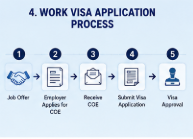
Step 1: Secure Employment
Before applying for a visa, applicants must receive a job offer from a Japanese company.
Step 2: Employer Applies for COE
The employer submits documents to Japanese immigration authorities.
Required documents may include:
- Employment contract
- Company registration documents
- Applicant qualifications
Step 3: Receive Certificate of Eligibility
Once approved, the employer sends the COE to the applicant.
Step 4: Submit Visa Application
Applicants apply at a Japanese embassy or consulate in their home country.
Documents usually include:
- Passport
- Visa application form
- Photographs
- COE
- Educational certificates
Step 5: Visa Approval
After approval, the applicant can travel to Japan and begin employment.
Average Salaries for Foreign Workers in Japan
Salary levels depend on qualifications, industry, and location.
Approximate annual salaries include:
| Profession | Annual Salary |
|---|---|
| Software Engineer | ¥4,000,000 – ¥8,000,000 |
| Data Scientist | ¥5,000,000 – ¥10,000,000 |
| English Teacher | ¥2,500,000 – ¥4,500,000 |
| Mechanical Engineer | ¥4,500,000 – ¥8,000,000 |
| Financial Analyst | ¥5,000,000 – ¥9,000,000 |
| Research Scientist | ¥5,000,000 – ¥12,000,000 |
Professionals with advanced qualifications can earn significantly higher salaries.
Industries Hiring Foreign Workers in Japan
Technology Sector
Demand remains strong for:
- Software developers
- AI specialists
- Cybersecurity professionals
- Cloud engineers
Healthcare
Japan’s aging population creates opportunities for:
- Nurses
- Caregivers
- Medical technicians
Manufacturing
The manufacturing industry requires:
- Engineers
- Technicians
- Production specialists
Education
English language education remains a major employment area.
Tourism and Hospitality
The tourism sector often seeks multilingual employees.
Cost of Living in Japan
Understanding living expenses is crucial before relocating.
Housing
Monthly rent may range from:
- ¥50,000–¥80,000 in smaller cities
- ¥100,000–¥200,000 in Tokyo
Food
Monthly food expenses average:
- ¥30,000–¥60,000
Transportation
Public transportation is efficient and widely used.
Monthly commuting costs typically range from:
- ¥5,000–¥20,000
Utilities
Average monthly expenses:
- ¥10,000–¥20,000
Benefits of Working in Japan
Foreign professionals often enjoy:
Stable Employment
Japanese companies generally emphasize long-term employment relationships.
Health Insurance
Employees receive access to Japan’s healthcare system.
Pension Benefits
Workers contribute to national pension programs.
Professional Development
Many employers provide extensive training programs.
International Networking
Japan offers exposure to global markets and multinational teams.
Challenges Foreign Workers May Face
Despite the opportunities, applicants should prepare for:
Language Barriers
Japanese language skills remain valuable in many workplaces.
Cultural Differences
Business etiquette differs from many Western countries.
Examples include:
- Formal communication
- Punctuality
- Team-oriented decision making
Competitive Job Market
Some industries remain highly competitive for foreign applicants.
Tips for Securing an Internship or Work Visa in Japan
Learn Basic Japanese
Even intermediate Japanese skills can significantly improve employment prospects.
Build Relevant Skills
Focus on:
- Technology certifications
- Industry-specific qualifications
- Communication skills
Prepare a Professional Resume
Japanese employers appreciate:
- Clear formatting
- Detailed qualifications
- Professional presentation
Network Strategically
Attend:
- Career fairs
- Online recruiting events
- Industry conferences
Networking often leads to valuable opportunities.
Gain Internship Experience
Internships help candidates:
- Understand workplace expectations
- Build professional connections
- Improve employability
Permanent Residency Opportunities
Foreign workers may eventually qualify for permanent residency.
Factors considered include:
- Length of stay
- Income level
- Tax compliance
- Contribution to society
Highly Skilled Professionals may qualify more quickly than other visa holders.
Future Outlook for Foreign Workers in Japan
Japan continues to face labor shortages across multiple industries.
As a result, employers increasingly recruit international talent to fill critical workforce gaps.
Growth areas include:
- Artificial Intelligence
- Information Technology
- Healthcare
- Renewable Energy
- Robotics
- Advanced Manufacturing
This trend is expected to create even more opportunities for foreign students, graduates, and skilled professionals over the coming years.
Conclusion
Japan remains one of the most promising destinations for international students and professionals seeking global career opportunities. Internship programs provide a valuable pathway into the Japanese labor market, while the country’s structured work visa system enables qualified foreign workers to build successful long-term careers.
Whether you are a student exploring internship opportunities, a recent graduate seeking employment, or an experienced professional aiming to relocate, understanding Japan’s internship pathways and work visa requirements is the first step toward achieving your career goals. By developing relevant skills, improving language proficiency, and preparing a strong application, you can significantly increase your chances of securing rewarding employment and establishing a successful future in Japan.