Introduction
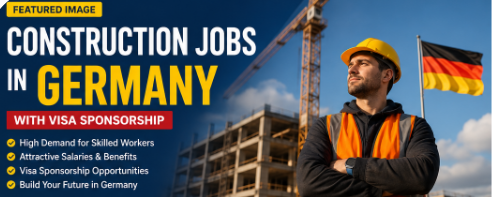
Germany is one of Europe’s largest economies and a global leader in engineering, manufacturing, and infrastructure development. As the country continues to modernize its transportation networks, expand renewable energy projects, and address housing shortages, the demand for skilled construction workers remains exceptionally high.
For foreign workers seeking stable employment abroad, construction jobs in Germany with visa sponsorship offer an excellent pathway to a rewarding international career. German employers are increasingly recruiting qualified workers from outside the European Union to fill critical labor shortages in construction and skilled trades.
Whether you are a carpenter, electrician, plumber, welder, mason, roofer, heavy equipment operator, or construction supervisor, Germany presents numerous opportunities for skilled professionals willing to relocate and contribute to the country’s growing construction sector.
This comprehensive guide explains everything you need to know about construction jobs in Germany with visa sponsorship, including available positions, salary expectations, visa requirements, qualifications, application procedures, and tips for securing employment successfully.
Why Germany Needs Foreign Construction Workers
Germany’s construction industry is facing a significant workforce shortage due to several factors:
Aging Workforce
A large portion of Germany’s skilled construction workforce is approaching retirement age. As experienced workers leave the labor market, employers struggle to find enough qualified replacements.
Infrastructure Development
The German government continues to invest heavily in:
- Highway construction and maintenance
- Railway modernization projects
- Public transportation systems
- Renewable energy infrastructure
- Residential housing developments
- Commercial construction projects
These investments create ongoing demand for construction professionals.
Housing Demand
Major German cities continue to experience housing shortages, leading to increased residential construction activity across the country.
Skilled Labor Gap
Many construction companies report difficulties filling vacancies, particularly in specialized trades such as electrical installation, plumbing, roofing, welding, and structural construction.
As a result, employers increasingly recruit foreign workers through legal immigration pathways and visa sponsorship programs.
Benefits of Working in Germany’s Construction Industry

Competitive Salaries
Construction professionals in Germany often earn higher wages compared to many other countries. Salaries vary depending on qualifications, experience, location, and specialization.
Stable Employment
Germany’s strong economy provides excellent job stability and long-term career prospects.
Legal Employment Rights
Workers benefit from:
- Employment contracts
- Health insurance
- Paid annual leave
- Social security contributions
- Workplace safety protections
- Pension benefits
Career Advancement
Construction workers can progress into supervisory, management, or specialist roles with additional training and experience.
Permanent Residency Opportunities
Many visa pathways can eventually lead to permanent residency and long-term settlement in Germany.
Family Reunification
Qualified workers may have opportunities to bring eligible family members to Germany under family reunification programs.
Most In-Demand Construction Jobs in Germany
1. Electricians
Electricians are among the most sought-after professionals in Germany’s construction sector.
Responsibilities include:
- Installing electrical systems
- Wiring buildings
- Maintaining electrical equipment
- Troubleshooting electrical faults
- Ensuring safety compliance
Average Salary:
€40,000 – €65,000 per year
2. Plumbers and HVAC Technicians
Germany’s construction and renovation projects require skilled plumbing and heating specialists.
Responsibilities include:
- Installing water systems
- Maintaining heating systems
- Repairing pipelines
- Installing ventilation equipment
- Performing inspections
Average Salary:
€38,000 – €60,000 per year
3. Welders
Welders play critical roles in industrial and construction projects.
Responsibilities include:
- Metal fabrication
- Structural welding
- Equipment maintenance
- Quality inspections
- Reading technical drawings
Average Salary:
€38,000 – €65,000 per year
4. Carpenters
Carpenters remain highly valued in residential and commercial construction.
Responsibilities include:
- Building wooden structures
- Installing frameworks
- Interior finishing
- Roofing support structures
- Renovation work
Average Salary:
€35,000 – €55,000 per year
5. Masons and Bricklayers
Construction companies consistently recruit skilled masonry workers.
Responsibilities include:
- Bricklaying
- Stonework
- Concrete block installation
- Structural wall construction
- Restoration projects
Average Salary:
€35,000 – €55,000 per year
6. Roofers
Germany’s residential and commercial building sectors require experienced roofing specialists.
Responsibilities include:
- Roof installation
- Repairs and maintenance
- Waterproofing
- Insulation work
- Solar panel preparation
Average Salary:
€38,000 – €60,000 per year
7. Heavy Equipment Operators
Operators are needed for large infrastructure and construction projects.
Responsibilities include:
- Operating excavators
- Driving bulldozers
- Handling cranes
- Site preparation
- Material movement
Average Salary:
€45,000 – €70,000 per year
8. Construction Supervisors
Experienced professionals may qualify for leadership positions.
Responsibilities include:
- Project coordination
- Workforce management
- Safety compliance
- Budget oversight
- Quality control
Average Salary:
€55,000 – €90,000 per year
Visa Sponsorship Opportunities
Many German construction companies sponsor qualified foreign workers through legal employment-based immigration programs.
Visa sponsorship typically includes:
- Employment contract
- Work authorization support
- Documentation assistance
- Residence permit guidance
- Relocation support in some cases
Employers facing labor shortages often work with recruitment agencies and government-approved programs to hire international workers.
Types of German Work Visas for Construction Workers
Skilled Worker Visa
The Skilled Worker Visa is one of the most common pathways for construction professionals.
Requirements generally include:
- Recognized vocational qualification
- Job offer from a German employer
- Relevant work experience
- Proof of qualifications
Opportunity Card (Chancenkarte)
Germany’s Opportunity Card allows qualified foreign workers to enter Germany and search for employment opportunities.
Benefits include:
- Job search flexibility
- Potential transition to employment
- Access to Germany’s labor market
Employment Visa
Workers with confirmed job offers may qualify for an employment visa supported by their employer.
Eligibility Requirements
To qualify for construction jobs with visa sponsorship, candidates typically need:
Relevant Qualifications
Applicants should possess:
- Trade certifications
- Vocational training credentials
- Technical qualifications
- Apprenticeship certificates
Work Experience
Most employers prefer:
- Two or more years of relevant experience
- Demonstrated practical skills
- Industry knowledge
Language Skills
Although some employers accept basic English, German language skills significantly improve employment prospects.
Recommended levels:
- A2-B1 German for entry-level positions
- B1-B2 German for advanced positions
Health and Fitness
Construction work often requires:
- Physical fitness
- Medical suitability
- Ability to work in varying conditions
Clean Background Record
Applicants may need:
- Police clearance certificates
- Employment references
- Verification of professional history
Required Documents
Applicants generally need:
- Valid passport
- Updated CV
- Educational certificates
- Trade qualifications
- Employment references
- Language certificates
- Passport photographs
- Job offer letter
- Visa application forms
Document requirements may vary depending on nationality and visa category.
How to Find Construction Jobs in Germany
Online Job Portals
Popular platforms include:
- Make it in Germany
- Federal Employment Agency job portal
- StepStone
- Indeed Germany
Recruitment Agencies
Specialized recruitment agencies connect international workers with German employers.
Company Websites
Large construction firms frequently advertise vacancies directly on their websites.
Professional Networks
Networking with industry professionals can reveal opportunities before they are publicly advertised.
Trade Associations
Construction industry organizations often share recruitment information and employment opportunities.
Application Process
Step 1: Prepare Your Documents
Ensure qualifications and experience are clearly documented.
Step 2: Search for Suitable Positions
Target roles matching your skills and experience.
Step 3: Submit Applications
Customize your resume and cover letter for each position.
Step 4: Attend Interviews
Interviews may occur online or in person.
Step 5: Receive Job Offer
Successful candidates receive employment contracts outlining responsibilities and compensation.
Step 6: Apply for Visa
Submit visa applications through the appropriate German embassy or consulate.
Step 7: Relocate to Germany
Upon visa approval, workers can travel and begin employment.
Salary Expectations
Construction salaries vary by region and specialization.
Typical annual salary ranges:
| Position | Average Annual Salary |
|---|---|
| Laborer | €30,000 – €40,000 |
| Carpenter | €35,000 – €55,000 |
| Electrician | €40,000 – €65,000 |
| Plumber | €38,000 – €60,000 |
| Welder | €38,000 – €65,000 |
| Roofer | €38,000 – €60,000 |
| Equipment Operator | €45,000 – €70,000 |
| Supervisor | €55,000 – €90,000 |
Additional compensation may include:
- Overtime pay
- Shift allowances
- Holiday bonuses
- Performance incentives
Best Cities for Construction Jobs
Berlin
Germany’s capital continues to experience strong residential and commercial development.
Munich
Known for high salaries and extensive construction activity.
Hamburg
Offers opportunities in commercial, residential, and infrastructure projects.
Frankfurt
Major financial center with ongoing construction investments.
Stuttgart
Strong industrial base and construction demand.
Cologne
Growing urban development and renovation projects create employment opportunities.
Cost of Living in Germany
Monthly expenses vary by location.
Estimated costs:
- Accommodation: €600 – €1,500
- Food: €250 – €450
- Transportation: €50 – €150
- Utilities: €100 – €250
- Miscellaneous: €150 – €400
Workers in larger cities generally earn higher salaries to offset increased living costs.
Tips for Securing Visa-Sponsored Construction Jobs
Improve German Language Skills
Language proficiency dramatically increases hiring prospects.
Obtain Recognized Certifications
Internationally recognized qualifications strengthen applications.
Highlight Relevant Experience
Focus on practical achievements and project experience.
Build a Professional Resume
Use a clear European-style CV format.
Apply Consistently
Submit applications to multiple employers to maximize opportunities.
Research Employers Carefully
Verify company legitimacy before accepting offers.
Prepare for Interviews
Demonstrate technical expertise and willingness to adapt to German work culture.
Challenges Foreign Workers May Face
Language Barriers
Limited German proficiency can affect workplace communication.
Qualification Recognition
Some foreign certifications require evaluation or recognition.
Cultural Adaptation
Adjusting to workplace expectations may take time.
Housing Search
Finding accommodation in major cities can be competitive.
However, many employers assist workers during the transition process.
Future Outlook for Construction Workers in Germany
The outlook remains highly positive.
Several factors continue to drive demand:
- Infrastructure modernization
- Green energy projects
- Urban development
- Housing construction
- Retirement of existing workers
Experts expect skilled construction professionals to remain in demand for years to come, creating long-term opportunities for foreign workers.
Conclusion
Construction jobs in Germany with visa sponsorship offer excellent opportunities for skilled foreign professionals seeking stable employment, competitive salaries, and long-term career growth. The country’s ongoing labor shortage, combined with major infrastructure and housing projects, has created strong demand for electricians, plumbers, welders, carpenters, masons, roofers, equipment operators, and construction supervisors.
Candidates with recognized qualifications, relevant experience, and basic German language skills are particularly well-positioned to benefit from Germany’s welcoming immigration pathways for skilled workers. By preparing strong applications, obtaining necessary certifications, and understanding visa requirements, foreign workers can successfully build rewarding careers in one of Europe’s most dynamic construction markets.
As Germany continues investing in infrastructure, housing, and sustainable development projects, construction professionals with the right skills can expect promising opportunities and a clear path toward long-term residence and professional success.