Germany has long stood as one of Europe’s most powerful economies, and right now, it is actively opening its doors to skilled international workers like never before. With a population that is aging rapidly and a labor market facing critical shortages in key industries, the German government and thousands of private employers are offering something truly remarkable: fully sponsored jobs with high salaries — positions where your visa, relocation, and sometimes even your language training are covered as part of the employment package.
If you have ever dreamed of building a career in Germany while earning a competitive European salary, this guide breaks down everything you need to know — from which industries are hiring, to how sponsorship works, to the salaries you can realistically expect.
What Does “Fully Sponsored” Mean in the German Job Market?
Before diving into specific roles and salaries, it is important to understand exactly what “fully sponsored” means in the context of German employment, because it can vary slightly between employers.
A fully sponsored job in Germany typically includes one or more of the following:
Visa and Work Permit Sponsorship — The employer handles the cost and paperwork of applying for your EU Blue Card or Germany Skilled Worker Visa on your behalf. This alone can save applicants hundreds of euros in administrative and legal fees.
Relocation Allowance — Many German employers, particularly in tech, engineering, and healthcare, provide a lump-sum relocation payment ranging from €1,500 to €5,000 or more to help you move your belongings, pay a deposit on an apartment, and settle into your new city.
Language Course Funding — If German proficiency is needed for your role, some employers partner with language schools or fund private German lessons so you can reach the required level while already employed.
Housing Assistance — Large corporations and some public-sector employers offer temporary company housing or subsidized accommodation for the first few months while you search for a permanent residence.
Health Insurance Coverage — In Germany, statutory health insurance is mandatory and typically shared between employer and employee. Sponsored packages often ensure you are enrolled from day one with contributions factored into your overall compensation.
Understanding what your specific offer includes is critical. Always request a detailed employment contract and read the benefits section carefully before accepting any position.
Why Germany Is Actively Recruiting International Workers
Germany’s Federal Employment Agency (Bundesagentur für Arbeit) has confirmed shortages in over 200 recognized occupations. The country needs an estimated 400,000 skilled workers per year just to maintain its current economic output, according to government labor projections.
To address this, Germany passed the Skilled Immigration Act (Fachkräfteeinwanderungsgesetz) in 2020 and significantly expanded it in 2023 and 2024. The updated law:
- Allows workers from non-EU countries to enter Germany and search for work for up to one year on a job-seeker visa
- Extends the EU Blue Card to a broader range of professions, including vocational and trade roles — not just university graduates
- Introduced a new “Opportunity Card” (Chancenkarte) based on a points system, giving skilled workers without a firm job offer a legal pathway to enter Germany and begin the job search on the ground
- Reduced bureaucratic delays at German embassies abroad for applicants with confirmed job offers
This shift in immigration policy means international workers with in-demand skills now have more legal routes than ever before to secure fully sponsored employment in Germany.
Top High-Paying Fully Sponsored Jobs in Germany (2025)
1. Software Engineers and IT Specialists
Average Annual Salary: €60,000 – €95,000+
Germany’s technology sector, centered in Berlin, Munich, Hamburg, and Frankfurt, is experiencing a massive talent shortage. Companies like SAP, Siemens, Bosch, Zalando, and hundreds of growing startups are offering full relocation packages and visa sponsorship to software developers, data engineers, DevOps specialists, and cloud architects from around the world.
Roles in artificial intelligence and machine learning command particularly high premiums, often exceeding €90,000 per year even for mid-level positions. Most tech employers in Germany operate in English, making language less of a barrier in this sector than in others.
Key skills in demand include Python, Java, Kubernetes, AWS, Azure, React, and machine learning frameworks like TensorFlow and PyTorch.
2. Medical Doctors and Specialists
Average Annual Salary: €70,000 – €130,000+
Germany faces one of the most acute doctor shortages in Western Europe. There are thousands of unfilled physician positions across German hospitals and clinics, particularly in rural areas and in specialties like psychiatry, general practice, anesthesiology, and radiology.
Fully sponsored packages for doctors routinely include:
- Full visa and recognition of foreign medical qualifications (Approbation) sponsorship
- Funding for German language training up to B2 or C1 level
- Housing assistance for the first 6 to 12 months
- Salary supplements and performance bonuses
Medical professionals from countries like India, the Philippines, Egypt, and Romania have successfully relocated to Germany under sponsored employment, with many hospitals assigning dedicated relocation coordinators.
3. Nurses and Healthcare Workers
Average Annual Salary: €34,000 – €55,000 (plus benefits)
Germany is actively recruiting international nurses and care workers under a formal federal program. The Triple Win project — a cooperation between Germany, the Philippines, Tunisia, and other partner countries — places qualified nurses directly into German hospitals and care homes with full sponsorship.
Sponsorship for nurses includes language training (usually German up to B2), visa processing, and an orientation phase where candidates are supported in adapting to German healthcare standards and procedures. While base salaries are lower than in other high-pay sectors, the total compensation package — which includes paid vacation, statutory pension contributions, health insurance, and generous shift bonuses — makes these roles financially very attractive for workers coming from lower-wage economies.
4. Mechanical and Electrical Engineers
Average Annual Salary: €55,000 – €85,000
Germany is the birthplace of modern engineering and remains home to some of the world’s most respected manufacturing companies. The automotive industry (Volkswagen, BMW, Mercedes-Benz), industrial machinery, and renewable energy sectors all urgently need qualified mechanical, electrical, and mechatronic engineers.
Many of these companies have established HR partnerships with universities in India, China, and Eastern Europe and offer structured graduate programs with full visa sponsorship, structured onboarding, and competitive starting salaries. Engineers with experience in electric vehicle (EV) technology, battery systems, and power grid infrastructure are especially sought after as Germany accelerates its green energy transition.
5. Construction Trades and Civil Engineers
Average Annual Salary: €40,000 – €70,000
Germany is undergoing one of its largest construction booms in decades, driven by infrastructure investment, social housing programs, and the expansion of renewable energy installations. There is a critical shortage of civil engineers, architects, project managers, electricians, plumbers, and carpenters.
Vocational workers in construction can now access Germany through the expanded Skilled Immigration Act, which for the first time formally recognized non-academic professional qualifications from certain partner countries. Employers in this sector frequently offer relocation bonuses and housing allowances to attract workers from countries like Serbia, Bosnia, Turkey, and Brazil.
6. Logistics, Transport, and Supply Chain Professionals
Average Annual Salary: €35,000 – €60,000
Germany sits at the heart of European supply chains, and its logistics sector is one of the largest in the world. Truck drivers, warehouse managers, freight forwarders, and supply chain analysts are in acute demand.
Some German logistics firms — including subsidiaries of DHL, DB Schenker, and Rhenus — have launched international recruitment programs offering sponsored work visas, German language subsidies, and housing support for qualified candidates from outside the EU.
7. Financial Analysts and Banking Professionals
Average Annual Salary: €65,000 – €110,000+
Frankfurt is Germany’s financial capital and one of Europe’s most important banking hubs, particularly following Brexit’s impact on London. International banks, insurance companies, and fintech firms regularly sponsor skilled financial professionals from outside the EU, particularly for roles in risk management, quantitative analysis, compliance, and investment banking.
Sponsorship in this sector is typically handled through corporate immigration departments and can include premium relocation packages, school fees for dependents, and spousal work permit facilitation.
How to Find Fully Sponsored Jobs in Germany
Finding legitimate fully sponsored positions requires using the right channels. Here are the most effective approaches:
Official Job Platforms:
- Make it in Germany (make-it-in-germany.com) — The official German government portal for international skilled workers. Listings include visa-sponsoring employers and sector-specific guides.
- Bundesagentur für Arbeit Job Board (arbeitsagentur.de) — Germany’s federal employment agency lists thousands of open positions, including those eligible for sponsored visas.
- LinkedIn Germany — Filter by location (Germany) and look for positions tagged “visa sponsorship available.” Many large employers explicitly state this.
- StepStone.de and Indeed.de — Germany’s largest private job boards, with advanced search filters.
Sector-Specific Portals:
- Jameda and Medi-Jobs — for medical and healthcare professionals
- Heise Jobs — for IT and technology roles
- Ingenieur.de — for engineering positions
- TruckJob24 — for logistics and transport
Recruitment Agencies Specializing in International Placements:
Several German-licensed recruitment agencies specialize in placing international workers and managing visa sponsorship on behalf of employers. Working with such an agency can significantly streamline the process, though you should verify that any agency you use is properly registered and does not charge fees to candidates — legitimate agencies are paid by the hiring company, not the applicant.
Understanding the EU Blue Card: Germany’s Premium Work Visa
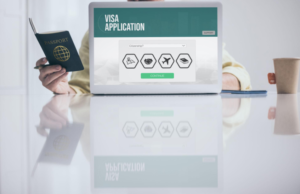
The EU Blue Card is Germany’s flagship work visa for skilled non-EU workers and is the most common route for high-pay sponsored positions.
To qualify for a German EU Blue Card in 2025, you typically need:
- A recognized university degree (or in some cases, equivalent vocational qualifications)
- A confirmed job offer from a German employer
- A salary meeting the minimum threshold — currently €45,300 per year for most professions, or €41,041.80 for shortage occupations such as doctors, nurses, engineers, and IT specialists
The Blue Card offers several major advantages over a standard work visa:
- It is valid for up to four years (or the duration of your employment contract plus three months, whichever is shorter)
- After 33 months of contributions to the German pension system, you can apply for permanent residence (or 21 months with B1-level German)
- Your spouse or partner receives a work permit automatically, without needing to prove their own qualifications
- Blue Card holders can move freely between most EU countries
This combination of legal security, fast-track permanent residency, and family benefits makes the EU Blue Card one of the most attractive work visa programs in the world.
Realistic Salary Expectations and Cost of Living
One of the most important questions for any prospective worker is: how far will your German salary actually go?
Germany has a statutory minimum wage of €12.82 per hour as of early 2025, but fully sponsored roles for international workers almost never fall near this level. Skilled professionals in sponsored positions can expect:
| Sector | Typical Annual Gross Salary |
|---|---|
| Software / IT | €60,000 – €95,000 |
| Medicine (Specialist) | €80,000 – €130,000 |
| Engineering | €55,000 – €85,000 |
| Finance / Banking | €65,000 – €110,000 |
| Nursing / Healthcare | €34,000 – €55,000 |
| Construction / Trades | €40,000 – €70,000 |
| Logistics / Transport | €35,000 – €60,000 |
Germany’s income tax rate is progressive and can feel significant, particularly for higher earners. However, Germany’s generous social insurance system (which includes statutory health insurance, unemployment insurance, and one of Europe’s best public pension systems) means that deductions come with real, tangible benefits.
Cost of Living Snapshot (Monthly Estimates for a Single Professional):
- Rent for a one-bedroom apartment: €900 – €1,800 (depending on city)
- Groceries: €300 – €500
- Public transport: €85 – €100 (monthly pass)
- Health insurance employee contribution: ~€300 – €450
- Utilities and internet: €150 – €250
Cities like Munich and Frankfurt are noticeably more expensive than Leipzig, Dresden, or Dortmund. Many international workers strategically choose lower-cost German cities where salaries remain competitive but living costs are substantially more manageable.
Steps to Secure a Fully Sponsored Job in Germany
Here is a step-by-step roadmap to guide your application process:
Step 1: Assess Your Qualifications Use the Anabin database (anabin.kmk.org) or the BQ Portal (bq-portal.de) to check whether your degree or professional qualifications are recognized in Germany, and in which occupational category they fall.
Step 2: Check Salary Thresholds Ensure the position you are targeting meets the minimum salary for a Blue Card or the relevant work visa category. Your employer’s HR department can confirm this.
Step 3: Build a German-Adapted CV A German Lebenslauf (résumé) follows a specific format that differs from English or American CVs. It is typically 1–2 pages, includes a professional photo, lists education and experience in reverse chronological order, and omits personal details like marital status or religion unless relevant. Using the correct format demonstrates professionalism and seriousness to German recruiters.
Step 4: Apply Through Verified Channels Apply directly through company websites, official portals, or registered recruitment agencies. Be cautious of unsolicited job offers via WhatsApp or unofficial email addresses, as Germany-based job scams targeting international applicants do exist.
Step 5: Attend the Interview Process German employers typically run structured, multi-stage interviews that may include technical tests, competency-based questions, and a final interview with senior leadership. Punctuality, preparation, and direct communication are highly valued in German professional culture.
Step 6: Receive and Review Your Contract Upon receiving a job offer, review your employment contract carefully — ideally with legal support. Confirm the exact sponsorship benefits, salary, notice periods, probation duration, and what happens if the contract is terminated early in relation to your visa status.
Step 7: Apply for Your Visa With a signed contract in hand, apply at your nearest German embassy or consulate. Processing times vary by country and consulate, but the German government has committed to faster processing for shortage occupations under recent immigration reforms. Many employers assign an internal relocation coordinator or engage an immigration law firm to assist you through this process.
Important Tips for a Successful Relocation to Germany
- Learn at least basic German — Even in English-speaking workplaces, daily life, government offices, and social integration are significantly easier with at least an A2 or B1 level of German. Many employers will fund this.
- Register at the Bürgeramt — Upon arrival in Germany, you must register your address at the local citizens’ registration office (Anmeldung) within 14 days. This is a legal requirement and unlocks your tax ID (Steuer-ID), bank account setup, and other essential services.
- Open a German bank account early — Your employer will require a German IBAN to process salary payments. Banks like N26, Deutsche Bank, and Commerzbank have English-speaking services and online account opening for new residents.
- Understand your tenancy rights — Germany has very strong protections for renters. Familiarize yourself with the Mietvertrag (rental contract) terms before signing.
- Connect with expat communities — Cities like Berlin, Munich, Hamburg, and Frankfurt have active international professional networks through platforms like Internations, Meetup, and local LinkedIn groups. These communities are invaluable for practical advice, social connections, and professional networking.
Conclusion: Is Germany the Right Move for You?
Germany offers one of the most compelling combinations of career opportunity, quality of life, legal protections, and long-term immigration pathways available in the world today. For skilled professionals in tech, healthcare, engineering, finance, and the trades, fully sponsored positions with high salaries are not only available — they are actively being advertised, with employers competing for qualified candidates.
The German government’s sustained commitment to immigration reform, combined with a culture of employment stability, world-class public infrastructure, and a central location within Europe, makes this an exceptional time to pursue a career in Germany.
Your next step is simple: assess your qualifications, identify the right sector, and begin applying through official, verified channels. Thousands of international workers have already made this transition successfully — and the pathway has never been clearer or more supported than it is today.